Is Google Search Dead? Why the Future of Performance Marketing is ChatGPT Advertising
- Feb 23
- 5 min read
Every few years, someone declares Google Search dead. First it was Facebook, then TikTok, now it's ChatGPT. The narrative is seductive: traditional search is archaic, AI is taking over, and if you're still running Google Ads, you're stuck in 2015.
Here's the reality. Google isn't dead. But the way people find information is fragmenting faster than most marketers realise: and if you're not preparing for what comes next, you're already behind.
The Data Doesn't Lie: Google Still Owns Search
Let's clear the air. Google commands approximately 90.8% of the global search engine market share. In the UK and US, that figure sits comfortably above 88%. This isn't a platform in decline: it's a juggernaut that hasn't budged in a decade.
But here's where it gets interesting. When you expand the definition beyond "search engines" to include all digital queries: ChatGPT, Perplexity, Claude, and the rest: Google still captures 77.9% of queries with 5 billion monthly active users. ChatGPT? 17.1% with 858 million monthly active users.
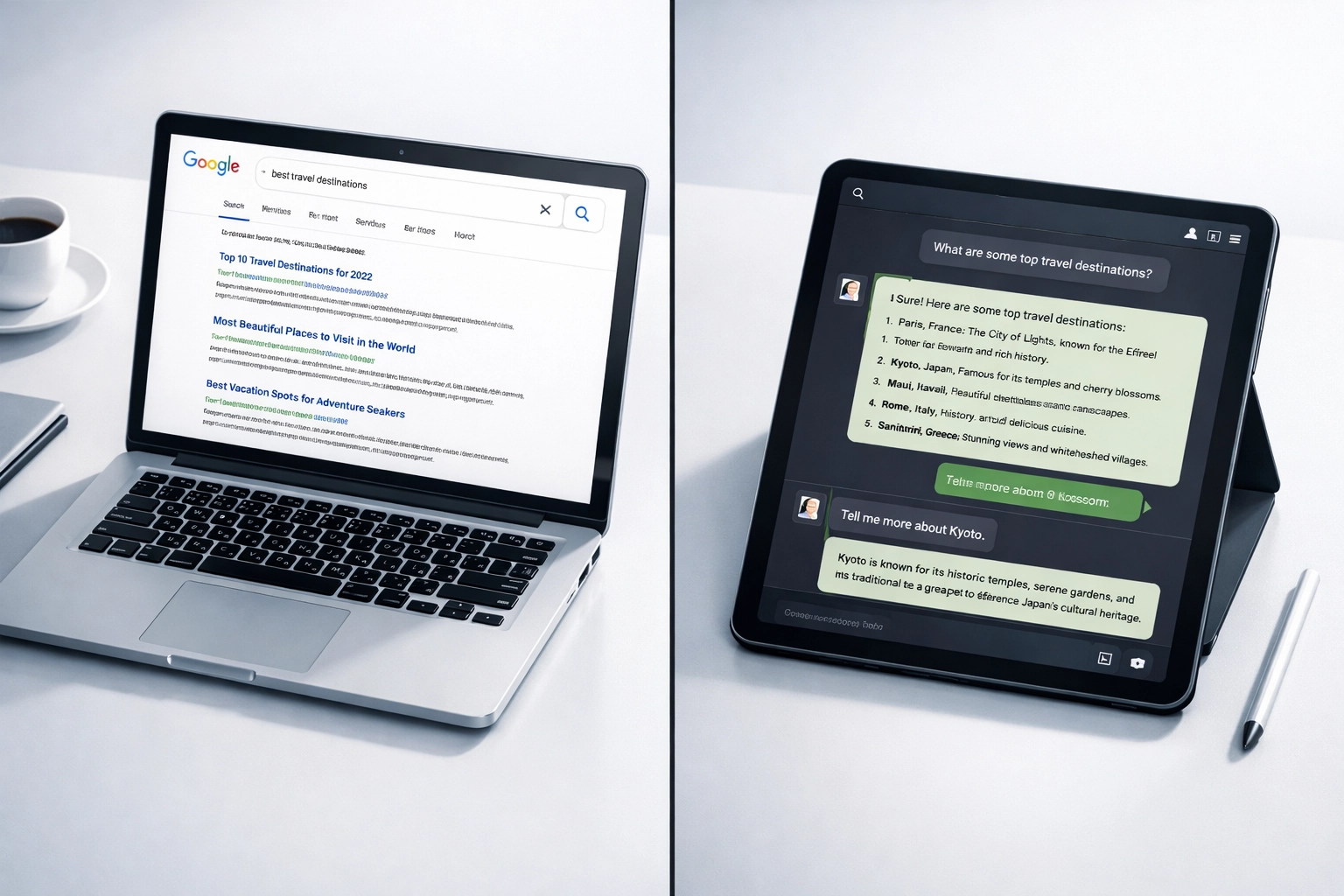
That 17.1% is not nothing. In fact, it's the most significant threat to Google's dominance in over 20 years. ChatGPT users spend nearly twice as long per session compared to Google users: 13 minutes versus 6 minutes. That extended engagement signals something deeper: people aren't just asking questions, they're having conversations.
What's Actually Happening: Query Fragmentation, Not Replacement
The shift isn't about Google dying. It's about the fragmentation of intent-driven behaviour across platforms.
Traditional search still dominates for high-intent, transactional queries. When someone searches "Google Ads agency London," they're ready to buy. They want results, fast. Google excels here because its algorithm is built to deliver exactly that: bottom-of-funnel leads with purchase intent baked in.
ChatGPT, on the other hand, thrives in exploratory, conversational spaces. Users come to AI when they need guidance, nuanced answers, or a second opinion. It's top-of-funnel behaviour wrapped in a conversational interface. That's why session times are longer. People aren't clicking through to a website: they're staying in the platform, asking follow-ups, refining their thinking.
For performance marketers, this fragmentation is both a challenge and an opportunity. You can't afford to ignore either channel. But treating them the same would be a mistake.
ChatGPT Ads Are Coming: And We're Getting Ready
OpenAI has made it clear: ChatGPT advertising is on the horizon. While exact launch dates remain unconfirmed, the writing is on the wall. Sponsored responses, native ad placements within conversational threads, and brand partnerships will likely form the foundation of this new ad ecosystem.
At AdsVantage London, we've been tracking this closely. The early movers in ChatGPT advertising will have a significant advantage: less competition, lower CPCs, and the ability to shape best practices before the platform matures.
Here's what we expect:
Conversational ad formats that integrate seamlessly into ChatGPT responses
Intent-based targeting that uses session context rather than keywords
Premium placements for brands that can demonstrate expertise and relevance
First-party data requirements to comply with privacy standards
The brands that win early on ChatGPT won't be those throwing traditional Google Ads strategies at a new platform. They'll be the ones who understand how to leverage conversational context, provide genuine value, and position themselves as authoritative voices in their space.
Google Isn't Standing Still: AI Overviews and the Evolution of SERPs
While everyone's focused on ChatGPT, Google has been quietly reshaping the search experience with AI Overviews (formerly known as Search Generative Experience, or SGE).
If you've searched Google recently, you've likely seen them: AI-generated summaries that appear at the top of results, pulling information from multiple sources to answer your query before you even click.
Here's the critical bit: ads will be integrated into these AI Overviews, and they'll be managed through the same Google Ads platform you're already using.
That means the high-intent, bottom-of-funnel leads Google is famous for aren't going anywhere. They're just being delivered in a new format. Instead of traditional blue links, your ad might appear as a recommended solution within an AI-generated answer. The intent is the same. The interface is different.
For businesses that rely on Google Ads for lead generation, this is brilliant news. You don't need to abandon your existing strategy: you need to optimise for visibility within AI Overviews while maintaining your traditional campaigns. Google remains the backbone of performance marketing, but the playbook is evolving.
Why Google Ads Still Dominates Bottom-of-Funnel Conversions
Let's be blunt: if you're a B2B business looking for qualified leads, Google Ads remains unmatched.
The reason is simple. Search intent on Google is transactional. When someone types "PPC agency for SaaS companies," they're not browsing. They're evaluating. They're comparing. They're ready to engage.
ChatGPT captures curiosity. Google captures commitment.
That distinction matters when you're measuring ROAS and justifying ad spend. Bottom-of-funnel leads generated through Google Ads consistently convert at higher rates than top-of-funnel traffic from awareness-focused platforms. It's not sexy, but it's effective.
At AdsVantage London, we've seen this play out across dozens of campaigns. Clients who diversify their digital strategy: running brand awareness on Meta, thought leadership content on LinkedIn, and high-intent Google Ads: consistently outperform those who go all-in on a single platform.
The Future Is Multi-Platform, Not Either/Or
Here's where most agencies get it wrong. They treat ChatGPT and Google as competitors, forcing clients to choose one over the other.
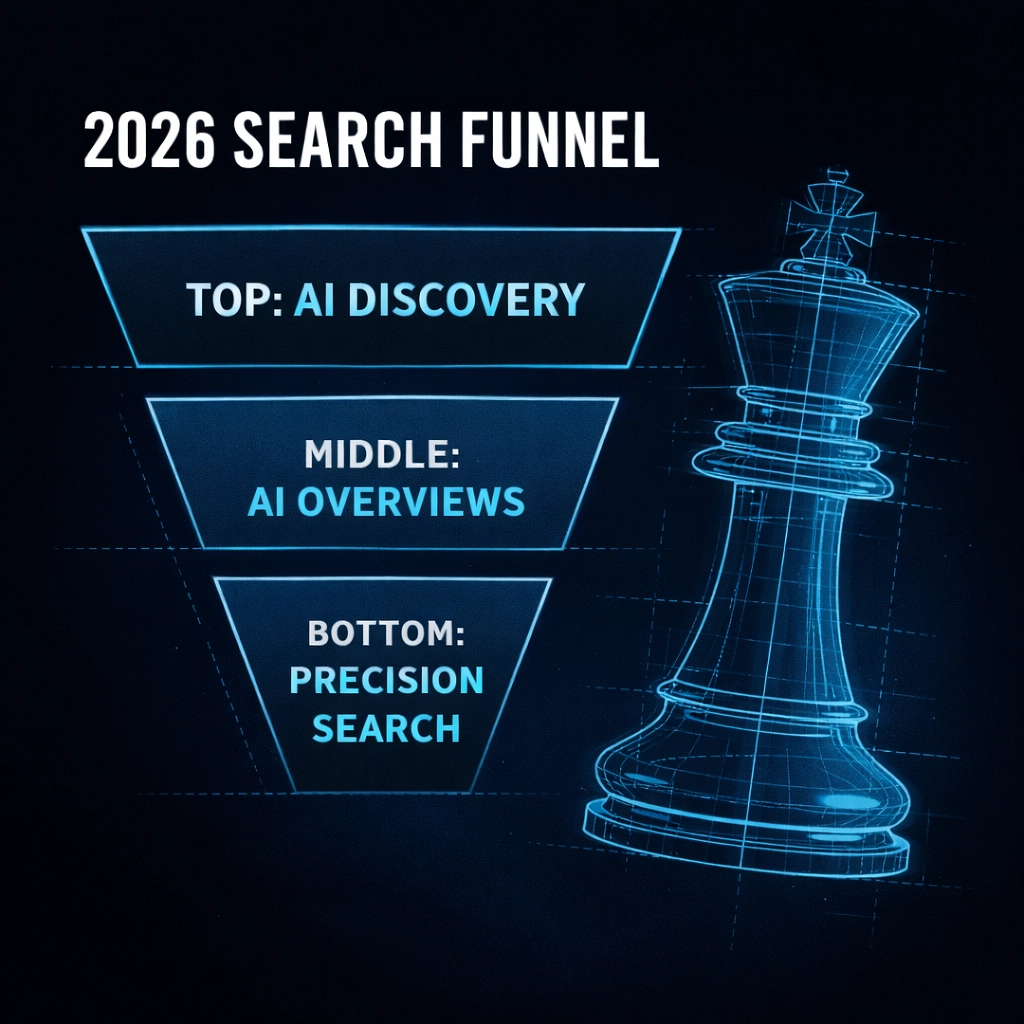
The smart play is strategic channel diversification based on intent stage.
Top-of-funnel awareness: ChatGPT advertising (when it launches), LinkedIn, content marketing
Mid-funnel consideration: Retargeting, AI Overviews, educational content
Bottom-of-funnel conversion: Google Ads, remarketing, direct search campaigns
This isn't about replacing Google. It's about recognising that user behaviour is fragmenting, and your ad strategy needs to meet people where they are: whether that's a traditional search result, an AI-generated overview, or a conversational thread in ChatGPT.
The agencies that thrive in 2026 and beyond will be those who can manage multi-platform performance campaigns with the same rigour and data discipline that made Google Ads so effective in the first place.
What This Means for Your Business
If you're still asking whether Google Search is dead, you're asking the wrong question.
The real question is: Are you prepared for a world where high-intent leads come from multiple platforms, each requiring a different approach?
At AdsVantage London, we're already preparing for ChatGPT advertising. We've been monitoring OpenAI's developments, studying early beta tests, and refining strategies that leverage conversational AI without abandoning the fundamentals of performance marketing.
But we're not abandoning Google Ads. Not even close. Google remains the most reliable source of bottom-of-funnel leads for B2B businesses, and with AI Overviews integrating ads directly into the search experience, that dominance is only getting stronger.
The future of performance marketing isn't ChatGPT or Google. It's ChatGPT and Google, managed with precision, optimised for intent, and built on a foundation of real data.
Want to stay ahead of the curve? Get in touch with AdsVantage London and let's talk about how to position your business for the next era of digital advertising.


Comments